Showing posts with label technology. Show all posts

Autonomous drones may have ‘hunted down’ and attacked troops in Libya without human control – UN report

 RT News

May 29, 2021


A UN report found that autonomous drones armed with explosive devices may have “hunted down” fleeing rebel fighters in Libya last year. If true, the report chronicles the world’s first true robot-on-human attack.

According to the report, anti-government Libyan National Army fighters, under military commander Khalifa Haftar, were retreating last March following an unsuccessful attack on Tripoli, when they ran into a swarm of terrifying aerial opponents.

They were “hunted down” by unmanned drones, as well as “lethal autonomous weapons systems,” the latter of which can be programmed by controllers to seek out and attack targets, and carry out these instructions even if communications with the controllers are severed.

Haftar’s fighters “were neither trained nor motivated to defend against the effective use of this new technology and usually retreated in disarray,” the report continues. While in retreat, “they were subject to continual harassment” from the killer robots.

It is unclear whether the drones were in contact with human controllers during these reported attacks, or whether they were directly responsible for any casualties or deaths. Were they operating autonomously, the scenario described in the report would likely mark a horrifying milestone: the first recorded incidence of truly independent robots attacking humans on the battlefield. However, the report does not specify what level of autonomy the robots were functioning under.

The drones, known as “loitering munitions,” are quadcopter-type vehicles outfitted with cameras and carrying small explosive devices. Left in an area to operate, they identify targets and dive from the air, blowing themselves up upon impact. The devices identified in Libya were ‘Kargu-2’ loitering munitions, deployed on the Libyan battlefield by Turkish forces allied with the UN-backed and Tripoli-based Government of National Accord.

Read the entire article

Scientists warn AI control of nukes could lead to ‘Terminator-style’ war

Jerusalem Post
December 25, 2019

Robot on display at Terminator 3 premier in Los Angeles

(photo credit: REUTERS PHOTOGRAPHER)

The world may be inching closer to an era where a Terminator-style apocalyptic nuclear war could be possible due to yielding control over nuclear weapons to artificial intelligence (AI), according to publications by nuclear scientists and defense experts.
While numerous AI experts have told the Jerusalem Post over the years that people worried about AI turning on humanity as in the famous “Terminator” movies simply misunderstand the technology, the likelihood of AI making a catastrophic mistake with nuclear weapons is no fairytale.

A recent article in the Bulletin of the Atomic Scientists, a top group of nuclear scientists, as well as other recent publications by defense experts have said that Russia may already be integrating AI into a new nuclear torpedo it is developing known as the Poseidon, to make it autonomous.
According to the Atomic Scientists report, the US and China are also considering injecting AI deeper into their nuclear weapons’ programs as they modernize and overhaul their nuclear inventory.
There have been no express reports about Israel integrating AI into, what according to foreign reports, is an apparatus of between 80-200 nuclear weapons. But there have been reports of the IDF integrating AI into conventional weapons, such as its spice bomb carried by F-16s.

Amazon patents wristband that tracks warehouse workers' movements

The Guardian
February 5, 2018

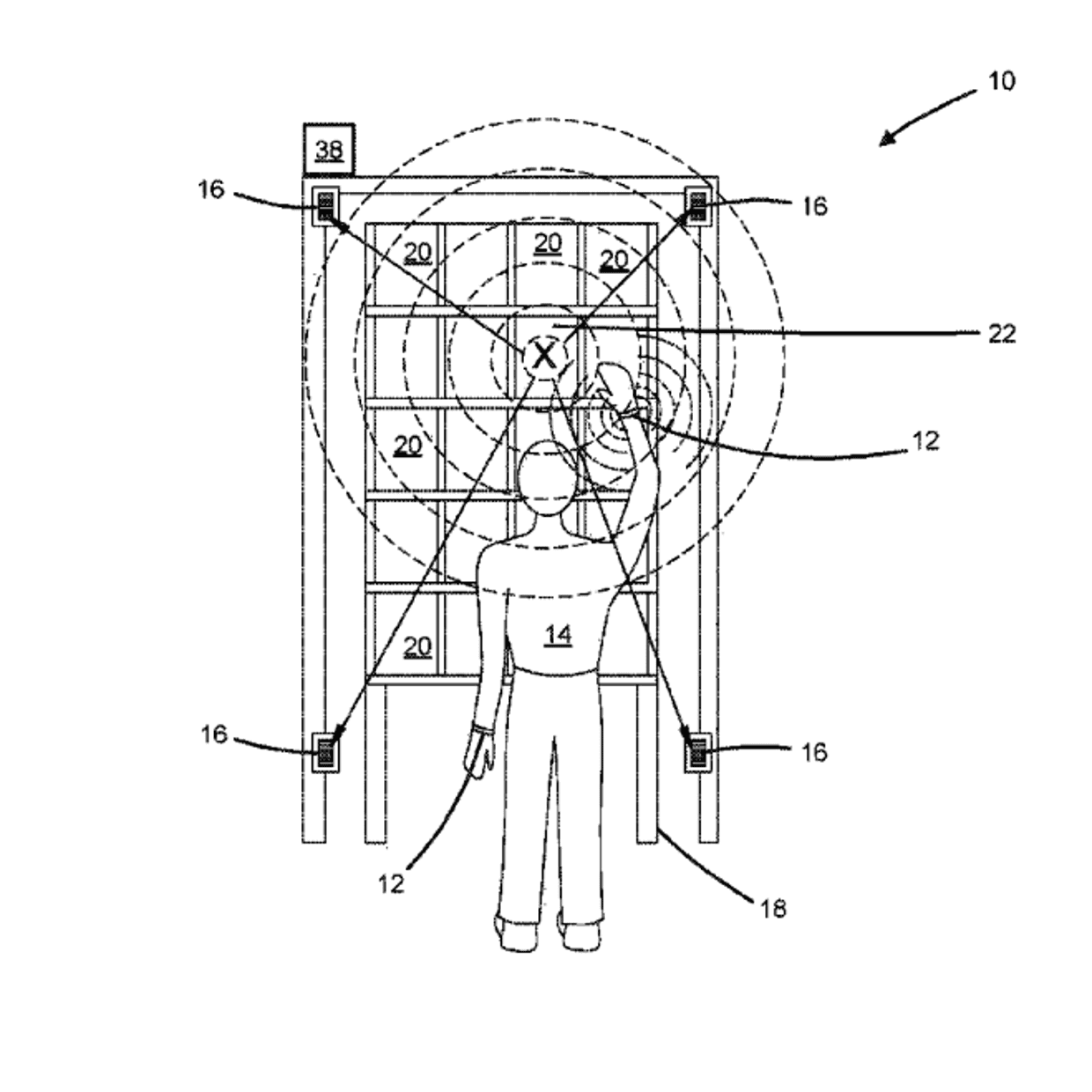
Amazon has patented designs for a wristband that can precisely track where warehouse employees are placing their hands and use vibrations to nudge them in a different direction.
The concept, which aims to streamline the fulfilment of orders, adds another layer of surveillance to an already challenging working environment.
When someone orders a product from Amazon, the details are transmitted to the handheld computers that all warehouse staff carry. Upon receiving the order details, the worker must rush to retrieve the product from one of many inventory bins on shelves, pack it into a delivery box and move on to the next assignment.
The proposed wristbands would use ultrasonic tracking to identify the precise location of a worker’s hands as they retrieve items. One of the patents outlines a haptic feedback system that would vibrate against the wearer’s skin to point their hand in the right direction.
The result? Human workers can fulfil more orders – until robots develop the dexterity to replace them altogether.
Ultrasonic bracelet and receiver for detecting position in 2D plane
worker’s hands as they retrieve items. Photograph: Amazon / USPTO
The wristbands are, according to the patent documents, first spotted by GeekWirFacebook
TwitterPinterest
 The proposed wristbands would use ultrasonic tracking to identify the precise location of a e, designed as a labour-saving measure to keep track of products throughout the warehouse.
A less generous interpretation would be that the wristbands provide Amazon management with new workplace surveillance capabilities that can identify the workers wasting time scratching, fidgeting or dilly-dallying.
Amazon already has a reputation for turning low-paid staff into “human robots” – working alongside thousands of proper robots – carrying out repetitive packaging tasks as fast as possible in an attempt to hit goals set by handheld computers.
This month, the 24-year-old warehouse worker Aaron Callaway described having just 15 seconds to scan items and place them into the right cart during his night shifts at an Amazon warehouse in the UK. “My main interaction is with the robots,” he said.
In 2016, a BBC investigation found that agency workers making Amazon deliveries reported defecating in bags, speeding and falling asleep at the wheel as they desperately tried to hit ambitious delivery targets issued by an Amazon logistics app.

Leaked Army Video Discusses Complexities of Operating in Future MegaCities

SIC SEMPER TYRANNIS !!! News
Mark Matheny
October 29, 2016

The world we live in is growing as far as population levels are concerned. And with that growth comes the expansion of mega cities.

The fastest population growth rates are primarily in Africa, and the Middle East. In Africa, the fastest annual population growth rates are at 3% or more in Western Sahara, Mali, Niger, Uganda, Eritrea, and Liberia. Much of Africa is between 2-3% growth rates as well.

In the Middle East, Afghanistan also has a population growth rate of 3% or more annually, with Pakistan and India following right behind it at between 2-3% annually.

Below is a map giving you a world view of population growth rates:

File:Population growth rate world 2005-2010 UN.PNG

From Wikimedia Commons, the free media repository

With this rate in population growth comes the concern among military analysts on just how to deal with operations in these highly dense and everchanging populated "mega cities".

In a leaked military video, we see what the controllers are focusing on as they develop what they detail as mega cities around the world.


We know that currently operations are taking place in both Africa, and the Middle East. 

In the beginning of the video it mentions growth rates by the year 2030. This caught my attention because Agenda 21,which the Elites have been pushing for "Sustainable Development", has now recently been renamed as "Agenda 2030". 

After seeing the video above describing the "mega Cities", pay attention to this next video. Especially the first half which describes "Agenda 2030" and the real intent of this UN initiative.


The Elites have in mind what are called "Controlled City Grids" which will basically contain the masses of civilian populations in different grid zones. A prime example of how these cities will look is called the "Masdar Initiative", and is currently under construction in the UAE.


.

In these types of cities, the controlling Elites will have all control over the populations contained in them. The citizens will be under constant surveillance and will be at the mercy of the controlling officials since there will be no personal transportation, and all activities will be monitored by "Smart" computers and controllers.

The problem that thew Elites are currently concerned about according to the leaked video, is how to control areas that will be in extreme poverty or in civil and political chaos.

Beta testing has been underway since the early operations in Afghanistan up to current operations there as well as Iraq and other areas in the Middle East and Africa.

I have done much reporting on this plan of the Elites to create a world under Technocratic rule.


Warning: Trilaterals And Technocrats Are Congregating At The Department Of Defense

Technocracy News
July 28, 2016
Eric Schmidt, CEO of Alphabet, Inc. and member of the Trilateral Commission (Wikileaks)

Ashton Carter, currently Obama’s Secretary of Defense, is a poster-boy for Technocracy. He is also a member of the elitist Trilateral Commission that has been promoting global Technocracy since its founding in 1973 by David Rockefeller and Zbigniew Brzezinski.
Carter has quietly assembled the Defense Innovation Advisory Board, which he claims will “advise the Pentagon on technology innovation issues.” As he recently announced new members, he stated,
[The board] “is charged with keeping DoD imbued with a culture of innovation in people, organizations, operations, and technology, to support people who innovate, those creative figures in our department who are willing to try new things, fail fast, and iterate; and also to ensure that we’re always doing everything we can to stay ahead of potential adversaries.”
  • Eric Schmidt, executive chairman, Alphabet Inc. (DIAB chair)
  • Jeff Bezos, president, chairman and CEO, Amazon Inc.
  • Adam Grant, professor, Wharton School of Business
  • Danny Hillis, computer theorist and co-founder, Applied Inventions
  • Reid Hoffman, co-founder, LinkedIn; and partner, Greylock Partners
  • Walter Isaacson, president and CEO, Aspen Institute
  • Eric Lander, president and founding director, Broad Institute of MIT and Harvard
  • Marne Levine, chief operating officer, Instagram
  • J. Michael McQuade, senior vice president for science and technology, United Technologies
  • William McRaven, chancellor, University of Texas System
  • Milo Medin, vice president, Access Services, Google Capital
  • Richard Murray, professor, California Institute of Technology
  • Jennifer Pahlka, founder, Code for America
  • Cass Sunstein, professor, Harvard Law School
  • Neil deGrasse Tyson, astrophysicist
While all of these could accurately be singled out as Technocrats, Carter has stacked the board with three of his elitist cronies from the Trilateral Commission.
Eric Schmidt is the head of Alphabet, which includes Google. Schmidt admittedly seeks to use technology to control the entire planet, and is the leading proponent of Transhumanism.
Walter Isaacson is a long-time member of the Trilateral Commission and is President of the Aspen Institute, formerly the Aspen Institute For Humanistic Studies. Aspen has indoctrinated tens of thousands of corporate executives and has been tightly intertwined with the Trilateral Commission since 1973.
Marne Levine, the chief operating officer at Instagram, formerly served as Vice President of Global Public Policy for Facebook. At Facebook, Levine worked with governments and organizations to understand and adapt to its technology and global policies.
Jeff Bezos, founder and CEO of Amazon, Inc.,  is another tech titan who has dreams of taking over the world economically.
Collectively, these people represent many other companies and organizations through participation in their boards of directors.
Should the Trilateral Commission have this kind of access to and influence within the Department of Defense? Given their goal of creating a “New International Economic Order” (which is Technocracy, or Sustainable Development), certainly not.

Robots Will Affect Workforce by 2025

Wall Street Journal
August 6, 2014

The Pew Research Center asked 1,900 technology experts if robots will help or hurt the workforce over the next 10 years. WSJ's Aaron Smith joins Lee Hawkins on Lunch Break to discuss the results. 


World's First Legal Flying Car

SIC SEMPER TYRANNIS!!!
April 8, 2014

This flying vehicle has been developed by a Dutch company, and is more like a helicopter when in flight mode.

Method of recording brain activity could lead to mind-reading devices, Stanford scientists say

The Almagest
December 7, 2013

A brain region activated when people are asked to perform mathematical calculations in an experimental setting is similarly activated when they use numbers — or even imprecise quantitative terms, such as “more than”— in everyday conversation, according to a study by Stanford University School of Medicine scientists.
Using a novel method, the researchers collected the first solid evidence that the pattern of brain activity seen in someone performing a mathematical exercise under experimentally controlled conditions is very similar to that observed when the person engages in quantitative thought in the course of daily life.
“We’re now able to eavesdrop on the brain in real life,” said Josef Parvizi, MD, PhD, associate professor of neurology and neurological sciences and director of Stanford’s Human Intracranial Cognitive Electrophysiology Program. Parvizi is the senior author of the study, to be published in Nature Communications. The study’s lead authors are postdoctoral scholar Mohammad Dastjerdi, MD, PhD, and graduate student Muge Ozker.
The finding could lead to “mind-reading” applications that, for example, would allow a patient who is rendered mute by a stroke to communicate via passive thinking. Conceivably, it could also lead to more dystopian outcomes: chip implants that spy on or even control people’s thoughts.
“This is exciting, and a little scary,” said Henry Greely, JD, the Deane F. and Kate Edelman Johnson Professor of Law and steering committee chair of the Stanford Center for Biomedical Ethics, who played no role in the study but is familiar with its contents and described himself as “very impressed” by the findings. “It demonstrates, first, that we can see when someone’s dealing with numbers and, second, that we may conceivably someday be able to manipulate the brain to affect how someone deals with numbers.”

Consumers Will Soon Have Devices In Their Hands To Detect GMO and Toxic Foods

preventdisease.com
May 26, 2013
In the not too distant future, consumers will be able to run on-the-spot tests for environmental toxins, GMOs, pesticides, food safety and more with their smartphones and other hand-held devices.
Every human being on every developed nation on Earth, whether living in a rural or isolated area, in the middle of a large city, or near an industrialized area, now contains at least 700 contaminants in their body including pesticides, pthalates, benzenes, parabens, xylenes and many other carcinogenic and endrocrine disrupting chemicals.
We are being bombarded on a daily basis by an astronomical level of toxicity, all controlled bychemical terrorists on behalf of the food industry. Morever, many of these toxins affect our fertility and those of successive generations.
It’s time for people to know exactly what they are putting in their bodies and technology is coming to the rescue. University of Illinois at Urbana-Champaign researchers have developed a cradle and app that uses a phone’s built-in camera and processing power as a biosensor to detect toxins, proteins, bacteria, viruses and other molecules.
“We’re interested in biodetection that needs to be performed outside of the laboratory,” said team leader Brian Cunningham, a professor of electrical and computer engineering and of bioengineering at Illinois. “Smartphones are making a big impact on our society — the way we get our information, the way we communicate. And they have really powerful computing capability and imaging. A lot of medical conditions might be monitored very inexpensively and non-invasively using mobile platforms like phones. They can detect molecular things, like pathogens, disease biomarkers or DNA, things that are currently only done in big diagnostic labs with lots of expense and large volumes of blood.”
“Modern biological research is also allowing an extension of laboratory devices on to small computer chips to detect biological information within DNA sequences,” said biotech specialist Dr. Marek Banaszewski. “Bioinformatic algorithms within programs will aid the identification of transgenes, promoters, and other functional elements of DNA making detection of genetically modified foods on-the-spot and real-time without transportation to a laboratory.”
The wedge-shaped cradle created by Cunningham’s team contains a series of optical components — lenses and filters — found in much larger and more expensive laboratory devices. The cradle holds the phone’s camera in alignment with the optical components.

At Immersive Labs, Ads Watch Who Looks At Them (VIDEO)

Huffington Post
April 27, 2011

Next time you look at a billboard, it might be looking back. It'll know your age, gender and how long you've been staring at it.

Targeted advertising is the golden goose of the online economy: ads keyed to a user's unique interests have been shown to double the effectiveness of traditional ads. But those ads have been restricted to the Internet--until now.

New York City startup Immersive Labs's outdoor ads use artificial intelligence to target the individuals or groups looking at them. Our video of Immersive Lab's ads below shows how they increase engagement and bring the Web's interactivity and customization out into the real world.

The facial recognition software can determine the gender and age of whoever is walking by, and, if there's more than one person looking, can detect the makeup of the crowd. That's nothing new. Billboards have been able to identify these characteristics for years. But unlike past technology, Immersive uses this information to deliver the ad with the best calculated chance of getting your attention at that moment. Alongside the consumer's information, the software customizes ads by pulling in local data including the weather and social media updates from sites like Twitter.

So if a fifty-year-old man strolls by an ad for tampons, the ad will morph seamlessly into an ad for running shoes before he gets there. If a crowd of men and women of all ages come by on a cold morning, the display might transform into an ad for hot coffee: a gender-neutral, time and weather appropriate solution. And if hundreds of people are tweeting about the Knicks game, the software might realize a sports game is unfolding nearby, and display a nicely appropriate Gatorade ad.

Read the entire article